

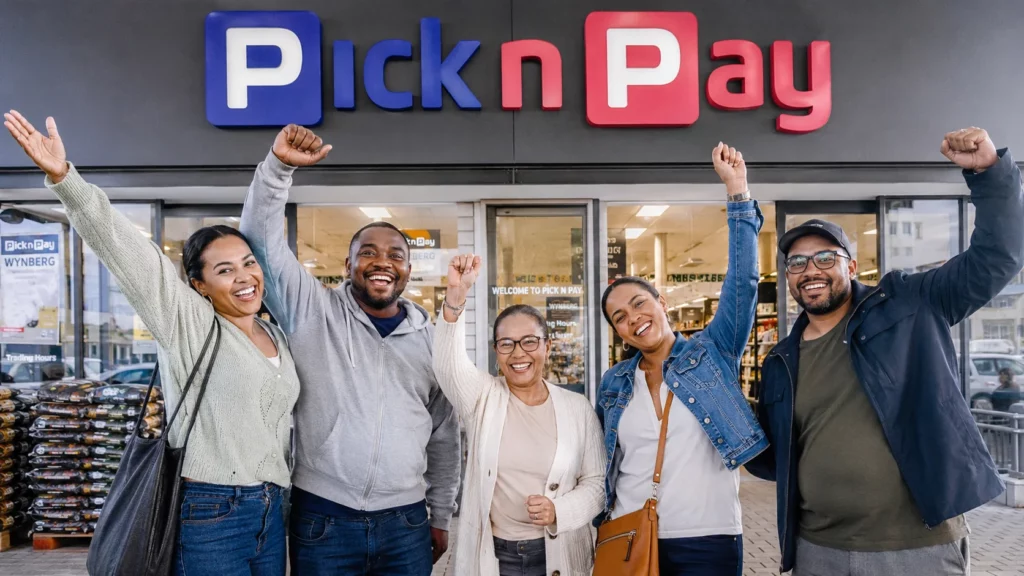
Sean Summers, in his BizCommunity interview, acknowledges that Pick n Pay was “destroyed from within” and that one of his key priorities is to rebuild internal confidence, strengthen staff alignment, and develop a leadership team capable of returning the company to profitable growth. This is not only applicable to Pick n Pay its equally important to all grocery brands in South Africa.
The real question is whether he can overcome the company’s internal “silo mentality” and take a fresh, evidence-led approach to using available consumer data to understand, segment, and target Pick n Pay’s customers more effectively. This means identifying the right customers, positioning stores in the right markets, and ensuring that each store format aligns with the needs, values, spending patterns, and emotions of the communities it serves.
More than this, Summers will need to ensure that Pick n Pay’s renewed brand positioning reflects not only in advertising but also in store location decisions, staff culture, customer experience, product range, pricing, and the overall emotional connection customers have with the brand. Pick n Pay is no longer dealing with a normal retail adjustment – it is in a full investment phase, rebuilding the business after financial and operational setbacks. Boxer remains a critical part of Pick n Pay’s future, acting as a critical source of value and strategic positioning. Summers describes Pick n Pay as having had to “restart” after breaching financial limits, while also closing nearly 90 stores and losing more than 2,500 jobs in the process.
This context makes their next investment phase especially important. Pick n Pay cannot rely only on cost-cutting, store closures or brand nostalgia; it needs a sharper, evidence-based strategy that tells management where to relocate, where to rationalise, where to expand, and how to reconnect emotionally with staff and customers.
This is where GeoScope South Africa can play a practical role. GeoScope combines retail network optimisation, geospatial consumer intelligence, primary research, MAPS consumer data, customer and staff satisfaction surveys, and AI-assisted analysis to help retailers make better investment decisions at store, catchment, suburb, township, mall and regional levels.
Key takeaways
- Pick n Pay’s turnaround requires a location-led investment strategy, not only a financial restructuring strategy.
- Retail network optimisation can identify which stores to retain, relocate, convert, close, refurbish or expand.
- Boxer’s success should inform Pick n Pay’s market segmentation, but the two brands must remain clearly aligned.
- Staff and customer satisfaction surveys can help refresh Pick n Pay’s brand persona from the inside out.
- AI and large language models can accelerate analysis of financial, operational, spatial, customer and competitor data for target profitability.
From Store Closures to Store Network Reset
Pick n Pay’s official strategy places strong emphasis on restoring sustainable profitability, accelerating Boxer’s growth, improving execution, resetting the store estate, strengthening partnerships and building a leaner operating model. The group’s 2025 strategy notes that the rights offer and Boxer’s listing, raised R12.5 billion, eliminated group net debt and created a more stable foundation for the turnaround.
This means the company has moved from survival into selective reinvestment. However, reinvestment only creates value when management knows which stores deserve capital, which stores need relocation, and which areas still offer unmet demand.
Retail network optimisation answers those questions. It moves the discussion away from “is this store profitable today?” and towards “does this store sit in the right trade area, serve the right customers, co-locate with the right competitors, and fit the future brand strategy?”
Why Retail Network Optimisation Matters Now
A supermarket chain is not simply a list of stores. It is a network of outlets, customer travel patterns, competing nodes, shopping centres, anchor tenants, taxi routes, residential and workplace populations, income segments, loyalty behaviours, and local brand perceptions.
GeoScope can help Pick n Pay map every store against local demand, nearby competitors, household income, population density, consumer expenditure, shopping centre hierarchy, township opportunity, transport access, and competitor intensity. This allows the group to classify stores into clear investment categories: protect, refurbish, relocate, resize, convert, franchise, rationalise, or expand.
This is especially important because Pick n Pay has already closed or converted loss-making stores as part of its reset. Reuters reported that the group closed or converted 40 loss-making South African supermarkets in FY2025, while the core Pick n Pay business strategy aims to break even in FY2028 after narrowing its losses. (Reuters)
Relocation Strategy – Moving Stores to Where Demand Has Shifted
Some Pick n Pay stores may not be fundamentally weak; they may simply be in the wrong place for today’s market. Residential growth, mall development, informal retail expansion, commuter flows, township growth, and changing income patterns can all leave an aging store network misaligned with modern demand. Take, for example, the work that GeoScope did with Avbob that realigned their funeral parlours and insurance branches to the changing market dynamics.
GeoScope can model whether a store should remain where it is, move closer to a growth node, shift into a stronger shopping centre, or reposition in relation to transport corridors and competing supermarkets. This is particularly important in suburbs where old retail nodes have weakened while newer convenience centres or regional malls have captured spending.
Relocation decisions need more than a site visit. They need trade area modelling, competitor mapping, drive-time analysis, footfall proxies, consumer segmentation, cannibalisation modelling and sales potential estimates.
Rationalisation – Closing the Right Stores
Rationalisation is risky when it focuses only on underperforming stores. A store may appear weak because it is badly managed, poorly stocked, poorly maintained or positioned against the wrong customer segment. A key reason why stalls do not do well is because of cannibalization from stalls within the same brand but also from competing chains. They may be in the most ideal location but cannot achieve revenue targets because of lots of sales from competing outlets.
GeoScope can help separate structural location problems from operational problems. A store in a strong market area may deserve refurbishment and management intervention, while a store in a declining or overtraded area may require closure, downgrading or conversion.
This distinction matters because unnecessary closures can hand market share to competing brands, including Boxer or local independent retailers. A rationalisation strategy must therefore protect profitable demand, not simply reduce the store count.
Expansion – Finding the White Spaces Before Competitors Do
Pick n Pay still has expansion opportunities, but they are unlikely to look like the expansion opportunities of the past. Growth may sit in township convenience nodes, middle-income densification corridors, mixed-use developments, new developments or shopping malls, growing towns and areas where competitors are present but not fully aligned with local consumers.
GeoScope’s retail network optimisation and geospatial services can identify these white spaces using spatial demand models, competitor supply data, trade area profiling, household income estimates, demographic growth and consumer behaviour data. GeoScope’s has the unique capability of developing databases using machine learning algorithms. Added to this the ability to geocode customers, map retail networks, conduct geospatial analysis, optimise retail network , and disseminate the information through web mapping. (Geoscope)
Expansion should also distinguish clearly between Pick n Pay and Boxer. Boxer should continue to serve price-sensitive, high-volume, value-led markets, while Pick n Pay should reclaim its role in quality, trust, freshness, convenience, family shopping and neighbourhood relevance.
Boxer as a Strategic Asset, Not a Substitute for Pick n Pay
Boxer has become one of the group’s strongest assets. Summer’s describes Boxer as a “fantastic business” and a critical source of value for Pick n Pays broader turnaround, but at the same time accelerating Boxer’s growth, which is one of the group’s two central objectives.
However, Boxer should not simply become the answer to every weak Pick n Pay location. In some markets, conversion may make sense; in others, it could destroy brand equity, alienate existing customers or create internal cannibalisation. Examples have been given of a Pick n Pay and Boxer being located in the same shopping mall with the former failing and the latter booming.,
GeoScope can help model where Boxer should grow, where Pick n Pay should be protected, and where the two brands can coexist. This requires mapping income segments, shopping missions, transport behaviour, basket expectations, product preferences, competitor formats and local perceptions of value.
Refreshing the Brand Persona from the Inside Out
Pick n Pay’s turnaround refer to the need to refresh the brand persona, including a return to the “blue stripes” identity and the “come home to Pick n Pay” platform. That is a powerful emotional idea, but a refreshed brand cannot live only in advertising.
Customers experience the brand through staff, queues, cleanliness, product availability, fresh produce, price confidence, store layout, safety, parking, payment systems and how problems are handled. Staff experience the brand through leadership, morale, training, fairness, workload, recognition and confidence in the company’s future.
GeoScope can support the brand refresh through structured staff and customer satisfaction surveys. Its survey research services include intercept surveys at retail locations to gather customer feedback and understand customer experience, service delivery and satisfaction. (Geoscope)
Using Values and Emotions to Rebuild Trust
A normal satisfaction survey asks whether customers are happy. A deeper values and emotions approach asks what the brand makes them feel, what it stands for, and whether it still fits the life they want to live.
For Pick n Pay, this could test whether customers associate the brand with trust, family, freshness, fairness, affordability, quality, convenience, nostalgia, confidence, community or frustration. It could also test whether staff feel pride, pressure, uncertainty, belonging, motivation or fatigue during the turnaround.
This matters because brand recovery is emotional before it becomes financial. If customers no longer feel that Pick n Pay understands them, they will not return simply because a store has new signage.
Mapping the Consumer – Using MAPS to Position the Brand Correctly
The Marketing All Products Survey, or MAPS, is one of South Africa’s most valuable consumer datasets. MAPS is a longitudinal consumer data source covering media, travel, shopping malls, mobile and internet, motor industry, financial, clothing, personal care, alcohol, soft drinks and grocery shopping, including brands, products, purchase frequency and purchasing behaviour. (Geoscope)
MAPS has an annual sample exceeding 20,000 respondents across metro, urban and rural areas and covers more than 3,000 brands across more than 150 media and product categories. (Marketing Research Foundation –)
GeoScope is the GIS is partner of the Marketing Research Foundation (MRF) and using geospatial approaches can turn MAPS into GeoMAPS that show where Pick n Pay’s current and potential customers live, shop, travel, consume media and compare grocery brands. This helps Pick n Pay or any other grocery brand position their store formats in the correct target market and sharpen its response to competitors.
Taking on Competitors with Local Market Intelligence
Pick n Pay competes with different retailers in different places. In affluent areas, it may face Checkers, Woolworths Food and premium Spar stores; in middle-income suburbs, it may compete with Checkers, Spar and Food Lover’s Market; in township and commuter markets, Boxer, Usave, Shoprite, Cambridge, independent supermarkets and even spaza shops in informal markets.
A national strategy will not solve these local battles. Pick n Pay needs localised competitor playbooks.
GeoScope can map each store’s trade area, nearby rival outlets, market overlap, consumer profiles, price sensitivity, shopping missions and brand fit. These maps can help Pick n Pay decide where to defend quality, where to compete on convenience, where to push fresh produce, where to strengthen private labels, and where to avoid price wars that destroy margin.
AI and Large Language Models – Turning Data into Faster Decisions
Pick n Pay’s turnaround creates a major data challenge. The business must interpret store performance, leases, labour structures, competitor locations, customer satisfaction, staff feedback, MAPS consumer data, demographic change, household income, transport costs, shopping centre performance and local market conditions.
AI and large language models can help management analyse this information faster. They can summarise survey responses, detect recurring complaints, compare store clusters, identify sentiment patterns, generate location briefs, flag inconsistent performance and support scenario planning.
GeoScope can combine AI with geospatial modelling to create decision-support tools for the retail network. This would allow executives to ask practical questions such as: “Why are stores underperforming despite having strong markets?”, “Which markets provide the best opportunity for Boxer’s expansion?”, “Which Pick n Pay stores face the highest cannibalisation risk from Pick n Pay or Boxer outlets?”, and “Which communities show strong grocery demand but weak brand penetration?”
From Primary and Secondary Data to Profitability
Primary data tells Pick n Pay what stores are experiencing now. Secondary data tells the company how the market is structured around each store and what factors are key determinants of revenue potential.
The value comes from combining the services and products of all GeoScope’s services and products. Customer intercept surveys can explain why shoppers avoid a store; staff surveys can reveal operational blockages; MAPS can identify high potential consumer segments; demographic data can quantify demand; competitor mapping can expose saturation; and AI can integrate all of this into store-level investment intelligence.
These approach support profitability because it reduces guesswork. It helps Pick n Pay avoid refurbishing the wrong stores, closing the wrong outlets, expanding into overtraded markets or positioning stores against the wrong customer segments.
A Practical Support Model for Pick n Pay
GeoScope could support Pick n Pay and other grocery brands through a phased programme. The first phase would build and integrate a national retail network intelligence base covering Pick n Pay, Boxer, competitors, shopping centres, demographic demand, consumer segments and store catchments.
The second phase would classify every store using AGAP analysis by investment action: retain, refurbish, relocate, rationalise, convert, expand or investigate further. This would create a defensible store estate reset plan that aligns with capital allocation.
The third phase would refresh the brand persona through customer and staff satisfaction surveys, values and emotions research, and store-level experience diagnostics. The final phase would use AI-assisted dashboards with integrated data systems to monitor performance, competitor response and customer sentiment over time.
The Real Opportunity – Rebuilding the Business Around the Customer
Pick n Pay’s recovery will depend on more than financial restructuring. It must rebuild the link between location, customer, staff, store performance and brand promise.
GeoScope can help by showing where profitable demand exists, what customers value, how competitors are positioned, where Boxer should grow, where Pick n Pay should defend, and where investment will produce the best returns on investment.
The future of Pick n Pay looks rosy as a respected brand under the insightful leadership of Sean Summers. However, to fully succeed strategies should be targeted, stores better located, more emotionally connected to staff, more locally responsive to customers and more disciplined in how it invests.
FAQ
-
How can retail network optimisation help Pick n Pay decide which stores to close, relocate or refurbish?
Retail network optimisation compares each store against its local market potential, not only its current sales. It looks at trade area size, income levels, competitor intensity, customer access, shopping centre strength, nearby cannibalisation, demographic growth and consumer behaviour. This helps Pick n Pay separate stores that are structurally weak from stores that are operationally weak but still located in strong markets. A weak store in a strong market may need refurbishment, better management or a refreshed customer proposition. A weak store in an overtraded or declining market may need relocation, conversion or closure.
-
Why should Pick n Pay use staff and customer satisfaction surveys during the turnaround?
A turnaround succeeds only when customers and staff believe the business has changed. Customer surveys can show whether shoppers experience better freshness, service, pricing, convenience, cleanliness and product availability. Staff surveys can reveal morale, training gaps, leadership problems, workload pressure and confidence in the brand’s future. GeoScope can combine both perspectives with values and emotions research to understand whether the “come home to Pick n Pay” message feels credible. This helps the brand refresh move beyond advertising and into the actual store experience.
-
How can MAPS consumer data help Pick n Pay compete more effectively?
MAPS can help Pick n Pay understand who its customers are, where they live, what they buy, which brands they prefer, how often they shop, what media they consume and how their behaviour differs by geography. When GeoScope maps MAPS data spatially, Pick n Pay can see where its brand fits strongly, where it is underperforming, and where competitors are better aligned with local consumers. This can guide store formats, product ranges, advertising, loyalty campaigns and expansion priorities. It also helps Pick n Pay avoid using one national strategy in markets that behave very differently.
-
What role can AI and large language models play in Pick n Pay’s profitability strategy?
AI and large language models can help Pick n Pay process large volumes of structured and unstructured data. They can summarise open-ended customer comments, detect staff morale themes, compare store clusters, identify local competitor threats, and generate store-level action briefs. When combined with geospatial models, AI can help management test scenarios such as relocation, rationalisation, refurbishment and expansion. It does not replace retail judgement, but it speeds up analysis and improves consistency. The result is a more evidence-led investment strategy focused on profitable growth.
