

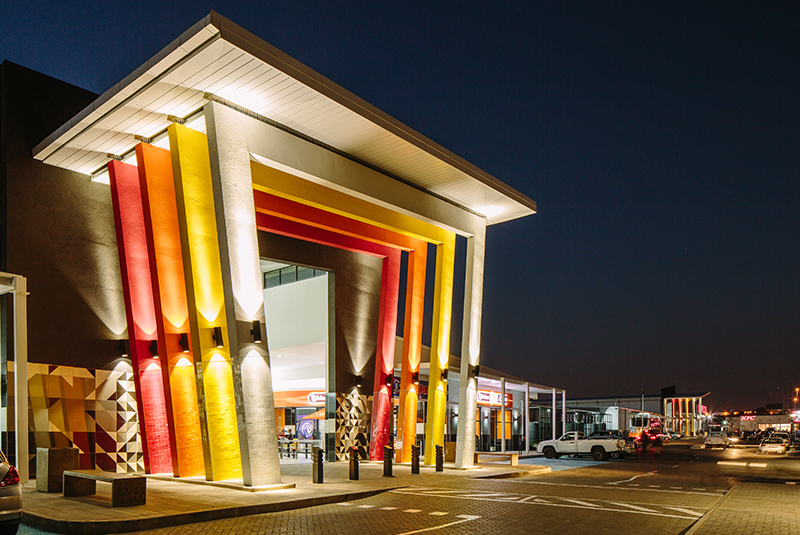
Townships are seen by many as areas of impoverishment while others call this home and revel in the cultural vibe and diversity. More recently, they have been seen as new frontiers for market development through the potential for retail expansion. Townships of South Africa have complex histories with each having its own diverse character as well as challenges, such as poverty, violence, and crime. Geospatial data on townships, their socio-economic and consumer characteristics and geospatial analysis is vital to contribute to effective decision-making and economic development in townships.
Soweto is the Heart of South Africa’s Township Identity
Soweto is the most iconic township in South Africa and has a population of over 1.7 million, with the majority living in formal residential areas. The township consists of various types of housing, including RDP houses, middle-income housing, and luxury housing. While informal settlements make up a small percentage, efforts are being made to transform hostels into family units. Commercial and industrial areas within Soweto and other townships are not sufficient to support the population and have consequently impacted the purchasing behaviours of residents over decades. There is also a lack of formal parks and recreational facilities that require structural, infrastructural, and moral mindset changes to improve residents lifestyles. Despite these challenges, the majority of the residents intend to remain in the townships.
Townships in South Africa have varying living standards and demographics. There are approximately 530 townships in the country, most being African/Black with Coloured townships dispersed throughout provinces and Asian/Indian townships mainly localized to KwaZulu-Natal and Gauteng. Through the establishment of shopping malls, economic development in townships can be stimulated.There is a significant disparity between the number of shopping malls with townships and those outside with townships having only 10% of all shopping centres in the country.
There is also a disparity in the number of shopping malls across provinces in comparison to the size of the economy in different provinces of South Africa. While there is an oversupply of malls in provinces like the Western Cape and KwaZulu-Natal, there are opportunities for development in provinces like the Eastern Cape and Gauteng. The impact of shopping malls on smaller retail trade is acknowledged, but it is argued that there is opportunity for the development of SMEs as part of the secondary & tertiary industries in partnership with shopping malls and that the less formal retail sector within townships remains vibrant.
The Marketing All Product Survey (Maps) provides detailed data on brands, products, media, travel, and consumer behaviour within townships. This information is vital for developing marketing and product strategies, especially understanding township consumers’ travel patterns and shopping habits. The trade areas of shopping malls are created using the market capacity required for a shopping centres to be viable and is the basis for comparing shopping centres of different sizes and types. Data on socio-economic and consumer behaviour can be integrated into trade areas to understand local conditions and compare one shopping mall to another.
Navigating Travel Barriers and Shopping Patterns in Developing Townships
Township residents often face high travel costs travelling long distances to reach their places of work. The lack of commercial facilities such as shopping centres in townships, has led to a preference for shopping outside of the township. The historical placement of townships far from commercial areas and the scarcity of commercial areas within townships contribute to this. While the public transport has slightly reduced travel costs, it remains inconvenient and expensive for township residents to travel to commercial areas. Proximity to malls affects shopping habits, with more malls being accessible leading to more frequent purchases. Understanding township consumers’ travel patterns is vital in developing effective marketing and product strategies.
Townships are a dichotomy of opportunity and struggle with high unemployment rates and income levels generally being lower compared to non-township areas but opportunities for economic development continues to rise as residents’ disposable income increases. Shopping centres play a critical role in driving this economic development in townships.
View the video

