

South African consumers are changing how they spend, shop, save and interact with brands. The latest national research reveals a market where financial pressure drives purchasing decisions, digital engagement continues to expand, and opportunities increasingly depend on understanding consumers at a local level.
South Africa’s consumer market is experiencing a significant transformation as households respond to rising living costs, economic uncertainty and changing retail environments. In the Market Research Foundation’s (MRF) October 2026 presentation of the Marketing All Product Survey (MAPS) results provides valuable insights into these developments, drawing on five years of research from July 2021 to June 2026.
The findings reveal a consumer landscape characterised by financial constraints, stronger demand for value, changing food consumption patterns and expanding digital engagement. However, the research also identifies encouraging signs of recovery in selected markets, particularly fast food, alongside opportunities for businesses that understand the geographic and socio-economic differences influencing consumer behaviour.
For retailers, financial institutions, property developers and consumer-facing brands, the challenge extends beyond identifying national trends. Businesses increasingly need to understand where consumers live, their purchasing power, their preferred shopping destinations and how these characteristics influence demand within individual communities.
Key Takeaways
- Financial pressure continues to dominate: Food prices, household expenses and limited savings influence consumer decisions and purchasing priorities.
- Fast food is recovering: Purchasing increased by 8% year on year after declining by 12% in the preceding period.
- Grocery spending is increasing: Average monthly grocery expenditure rose from R1,810 in 2021 to R2,279 in 2025.
- Digital engagement is reshaping consumer behaviour: Social media reaches approximately 75% of South Africans aged 15 and older, while online shopping and digital research create additional opportunities.
- Geography determines opportunity: National averages conceal important differences in income, accessibility, retail competition and consumer demand between communities.
South Africa’s Changing Consumer Landscape – A Market of 46.6 Million Adults
The MAPS research estimates South Africa’s population aged 15 years and older at approximately 46.6 million, distributed across 20.11 million households. The average household contains 3.52 people, highlighting the importance of household composition when examining consumption patterns and purchasing power.
Approximately 45% of the adult population lives in metropolitan areas, 27% in other urban areas and 29% in rural communities, according to the latest demographic profile. Gauteng accounts for approximately 28% of the adult population, followed by KwaZulu-Natal at 19%, the Western Cape at 13% and the Eastern Cape at 11%.
These geographic differences have direct implications for consumer-facing businesses. Metropolitan areas often provide concentrated demand and established retail infrastructure, while smaller urban settlements and rural communities require different approaches to accessibility, product affordability, outlet positioning and distribution.
Financial Pressure Reshapes Household Priorities
Household finances remain one of the most important influences on consumer behaviour in South Africa. The latest MAPS results indicate that approximately 46% of respondents identify the cost of food and groceries as a major concern, while unemployment and broader economic conditions continue to shape financial confidence.
The survey revealed considerable financial vulnerability, with 53% of respondents reporting that their financial position remained approximately the same as a year earlier. Only 26% indicated some improvement, while approximately 19% reported deteriorating finances, suggesting that many households have experienced limited financial progress despite changes in inflation.
Borrowing patterns reinforce this picture. Among people who reported taking out loans during the previous 12 months, 36% cited food as a reason, followed by paying bills at 15% and commuting or travel expenses at 11%, illustrating the extent to which credit supports essential household expenditure and the risk of food insecurity.
Rising Grocery Expenditure Highlights the Importance of Essential Goods
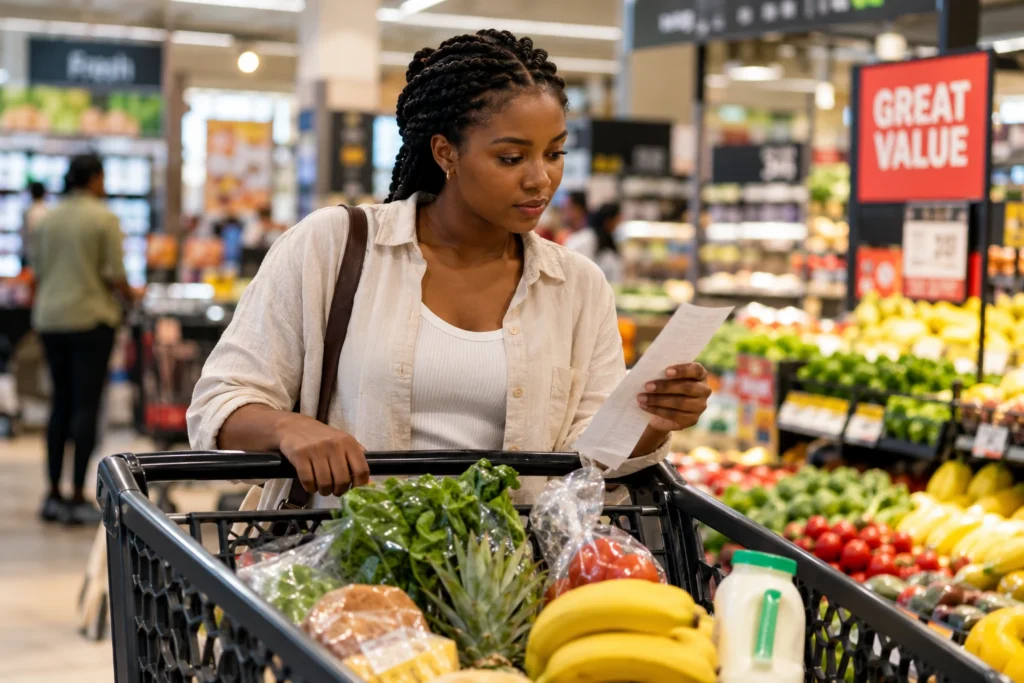
Food and household essentials continue to absorb a substantial portion of consumer expenditure. MAPS reports that average monthly grocery spending increased from R1,810 in 2021 to R2,279 in 2025, representing an increase of approximately 26% over four years.
This increase does not necessarily indicate that households purchase more groceries. Higher prices, changing purchasing frequencies and substitutions between products can all influence expenditure, making it important to distinguish nominal spending growth from actual growth in consumption volumes.
Shopping behaviour also reflects the importance of established household purchasing routines, with 64% of respondents reporting monthly grocery shopping combined with additional purchases between major shopping trips. For retailers, these patterns underline the need to balance bulk purchasing opportunities with convenient, affordable access to everyday necessities.
Grocery Retailers Face Increasing Competition for Consumer Loyalty
South African consumers have access to multiple grocery retail formats, ranging from national supermarket chains to community convenience stores and informal traders. MAPS distinguishes between bulk shopping, day-to-day grocery purchasing, convenience shopping and toiletries, recognising that consumers may favour different outlets depending on their immediate needs.
The findings also demonstrate the growing importance of retail loyalty programmes. Approximately 49% of consumers hold a store loyalty or rewards card, while Shoprite and Checkers’ Xtra Savings programme accounts for 46% of the leading loyalty-card responses in the latest survey year.
For retailers, effective loyalty programmes offer more than promotional benefits. They can support repeat visits, improve customer understanding and help businesses develop more relevant product assortments and promotions, particularly where price-sensitive consumers compare competing offers.
Fast Food Shows Signs of Recovery Despite Financial Constraints
One of the more encouraging findings concerns South Africa’s fast-food market. Following a 12% decline in the number of consumers purchasing fast food in the preceding survey year, MAPS recorded an 8% year-on-year recovery in the latest period.
The proportion of consumers purchasing fast food during the previous four weeks increased from approximately 41% to 43%. The presentation also reports average spending of R277 on the most recent fast-food restaurant visit, highlighting the sector’s continued importance despite household financial pressures.
Consumer preferences explain why particular outlets may succeed in this environment. Food quality influences 20% of outlet-choice responses, portion size 19%, convenient location 17% and value for money 16%, demonstrating that affordability matters alongside quality, quantity and accessibility.
Convenience and Accessibility Shape Purchasing Decisions
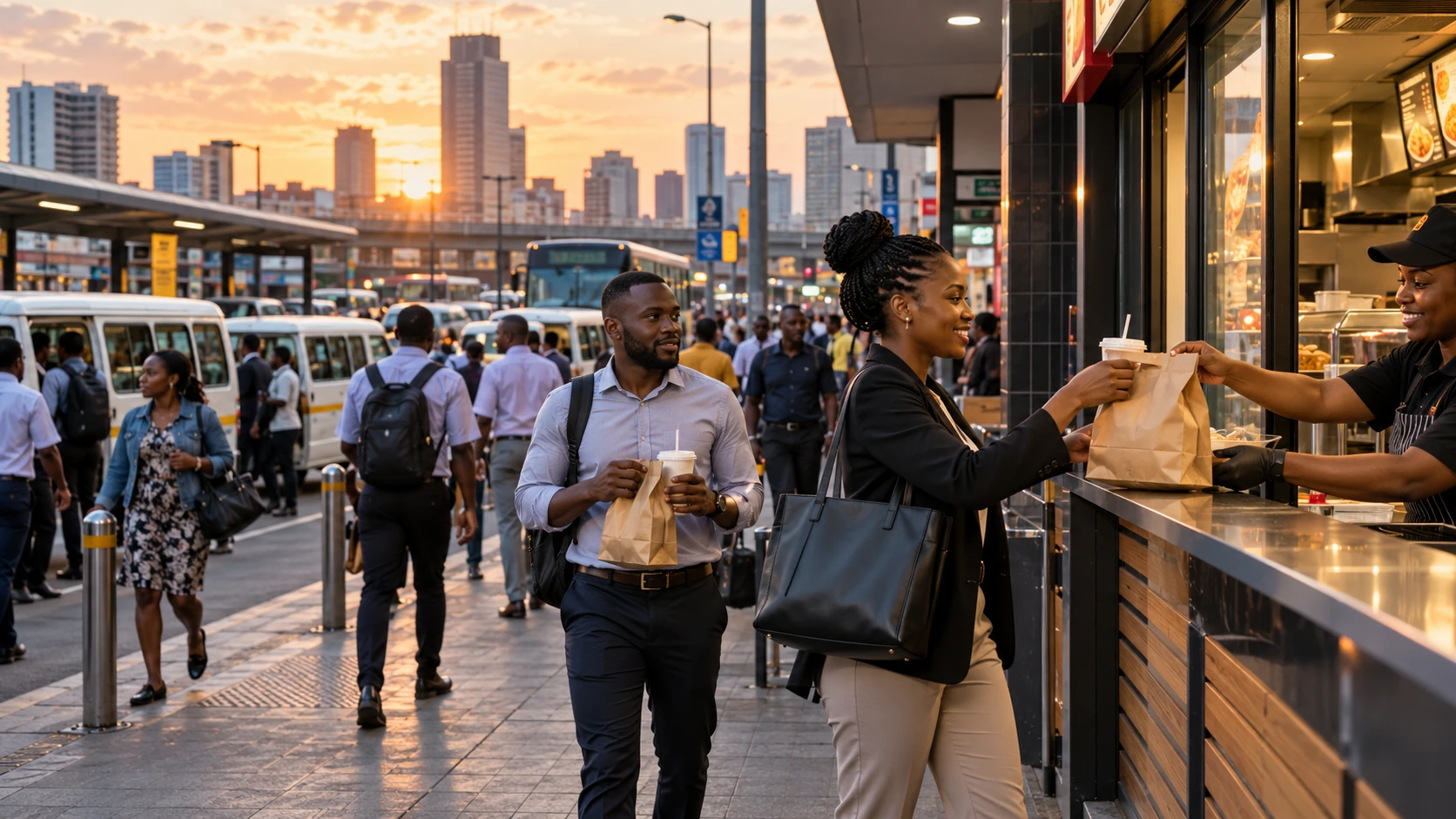
Consumer convenience extends beyond price and product availability. Among respondents covered by the MAPS fast-food purchasing behaviour analysis, 40% reported purchasing food during their commute, while 38% obtained takeaway food, highlighting the importance of daily movement patterns in determining outlet demand.
These findings have important implications for restaurant location strategies. Transport corridors, commuter routes, employment concentrations and neighbourhood commercial centres can generate demand that differs considerably from the residential population surrounding an outlet.
Businesses can respond by combining consumer research with GeoScope’s retail and service network optimisation services. Understanding travel times, competing outlets and the geographic distribution of expenditure provides a stronger foundation for evaluating existing locations and identifying potential expansion opportunities.
Digital Engagement Creates New Opportunities to Reach Consumers
South Africa’s digital consumer market continues to evolve, particularly through social media and mobile internet usage. MAPS reports that approximately 75% of people aged 15 and older use social media within a four-week period, while 79% accessed the internet during the preceding seven days in the second quarter of 2026.
WhatsApp dominates social media engagement, reaching 96% of social media users during the preceding four weeks, followed by Facebook at 76% and TikTok at 58%. The increasing importance of short-form video and social platforms suggests that brands should reconsider how they communicate with consumers across different age groups.
Traditional media nevertheless retains an important role. Television and radio continue to reach substantial audiences, meaning that successful campaigns should integrate digital and conventional platforms rather than assuming that every consumer has moved entirely online.
Online Shopping Is Growing but Physical Retail Remains Essential
Online shopping presents important opportunities, although e-commerce penetration remains considerably lower than general internet usage. MAPS indicates that approximately 18% of South Africans aged 15 and older purchased goods or services online during the previous four weeks.
Clothing accounted for 34% of responses in the presentation’s online-purchasing category breakdown, followed by fast food at 22% and groceries at 17%. These categories demonstrate how digital purchasing extends beyond traditional electronics and increasingly includes everyday consumer products.
However, online shopping does not eliminate the importance of physical stores. Retailers need to integrate online purchasing, delivery, collection and in-store experiences while ensuring that their distribution networks reflect consumer accessibility and local purchasing patterns.
Banking, Mobile Connectivity and Financial Inclusion Influence Consumption
Financial services provide another perspective on South Africa’s changing consumer economy. MAPS reports that approximately 78% of adults have a bank account, excluding SASSA accounts, while 19% transfer money to family or friends monthly, with an average transfer value of R1,140.
Mobile connectivity plays a central role in financial transactions, communication and digital shopping. Approximately 92% of reported cellphone arrangements are prepaid, while 79% of consumers spend R300 or less per month on cellphone services, demonstrating the importance of affordable connectivity.
These findings create opportunities for banks, telecommunications operators and retailers to develop products that reflect consumers’ financial circumstances. However, affordability and accessibility remain essential, particularly in lower-income communities where high transaction costs or expensive data packages can limit participation.
Geographic Consumer Intelligence Offers a Competitive Advantage
National consumer statistics provide an essential overview, but they cannot fully explain differences between individual communities. Two neighbourhoods within the same metropolitan municipality can have substantially different household incomes, population structures, transport accessibility and retail expenditure patterns.
This is where GeoScope’s geospatial consumer datasets, GeoMAPS can strengthen business decisions. By integrating demographic estimates, income, Living Standard Measures, retail locations and consumer purchasing behaviour, businesses can examine market opportunities at more detailed geographic levels.
The ability to identify underserved communities, assess retail competition and estimate local consumer demand can improve network planning and investment decisions. The same principles apply to shopping centres, financial services, fast-food outlets and other consumer-facing businesses that depend on customers reaching physical locations.
What the Consumer Trends Mean for South African Businesses
The MAPS findings suggest that businesses should reassess the relationship between consumer purchasing power, convenience and product value. A recovering consumer category does not necessarily translate into stronger performance for every brand or outlet, particularly where geographic coverage, local competition and pricing strategies differ.
Retailers should prioritise affordable product offerings, relevant loyalty benefits and a clearer understanding of the purchasing behaviour of their target consumers. Businesses should also consider how digital interactions support physical retail and whether their existing store networks adequately reflect changing settlement patterns and market demand.
Importantly, the findings highlight the value of combining consumer research with geographic analysis. GeoScope’s shopping mall and trade area mapping demonstrates how businesses can assess retail environments in relation to the communities, accessibility networks and competing facilities that shape consumer choices.
Understanding Consumers Will Determine Market Success
South Africa’s consumer market presents both challenges and opportunities. Financial pressure continues to constrain discretionary expenditure, but the recovery in fast-food purchasing, widespread digital engagement and growing adoption of loyalty programmes suggest that consumers continue to adapt their purchasing behaviour.
The central lesson from MAPS is that businesses cannot rely solely on national market averages or historical assumptions about consumers. Income, household composition, local competition, accessibility and purchasing preferences interact differently across locations, making more detailed consumer intelligence increasingly important.
Businesses that combine reliable market research with geographic analysis will be better equipped to identify emerging opportunities, refine their retail networks and improve long-term competitiveness. In a market where consumers make increasingly deliberate purchasing decisions, understanding not only who customers are but also where and how they shop will be critical.
Frequently Asked Questions
What are the most important consumer trends in South Africa in 2026?
The most important trends include continued household financial pressure, increasing expenditure on essential goods, recovering fast-food purchasing and growing digital engagement. According to the October 2026 MAPS presentation, fast-food purchasing increased by 8% year on year, while approximately 75% of South Africans aged 15 and older use social media within a four-week period.
Consumers increasingly evaluate products and services according to affordability, quality, convenience and value for money. Retail loyalty programmes also play an important role in encouraging repeat purchases and strengthening relationships between consumers and retailers.
For businesses, these trends highlight the importance of understanding different consumer groups rather than treating the South African market as a single, uniform customer base.
How are financial pressures affecting South African consumer spending?
Financial pressures encourage consumers to prioritise essential household expenditure, particularly groceries, transport and other recurring expenses. MAPS indicates that food accounts for 36% of reported reasons for taking out loans, while grocery costs remain among consumers’ most frequently identified concerns.
Households may respond by changing purchasing frequencies, selecting more affordable alternatives or making greater use of promotional offers and loyalty benefits. However, the survey does not establish how much purchasing volumes have changed in response to these behaviours.
Businesses should therefore distinguish between increases in expenditure caused by higher prices and genuine increases in demand. Understanding these differences is essential for forecasting sales, managing stock and setting realistic growth targets.
What opportunities exist in South Africa’s fast-food and grocery markets?
The latest MAPS results point to opportunities in both fast food and grocery retail, although competition for consumer spending remains intense. Fast-food purchasing recovered by 8% year on year, while average monthly grocery expenditure increased from R1,810 in 2021 to R2,279 in 2025.
Fast-food operators can strengthen their positioning through food quality, generous portions, convenient locations and attractive pricing. Grocery retailers can focus on affordable essentials, customer loyalty and convenient shopping formats that support both bulk and day-to-day purchasing.
The scale of these opportunities will differ between communities. Businesses need to consider household incomes, population concentrations, shopping behaviour and existing competition before expanding their retail networks.
Why is geospatial consumer analysis important for retail expansion in South Africa?
Geospatial analysis allows businesses to examine where potential customers live, how much they can afford to spend and how easily they can reach competing stores. It moves consumer research beyond national averages and reveals important differences between neighbourhoods, towns and metropolitan areas.
By combining demographic estimates, purchasing behaviour, transport accessibility and existing retail locations, businesses can identify underserved markets and assess whether proposed outlets have sufficient potential demand.
This approach also supports decisions about store consolidation, network optimisation and marketing territories. Rather than relying exclusively on general population statistics or fixed-distance buffers, retailers can evaluate market opportunities using trade areas that better reflect real-world customer movement and local competition.
